Field Note
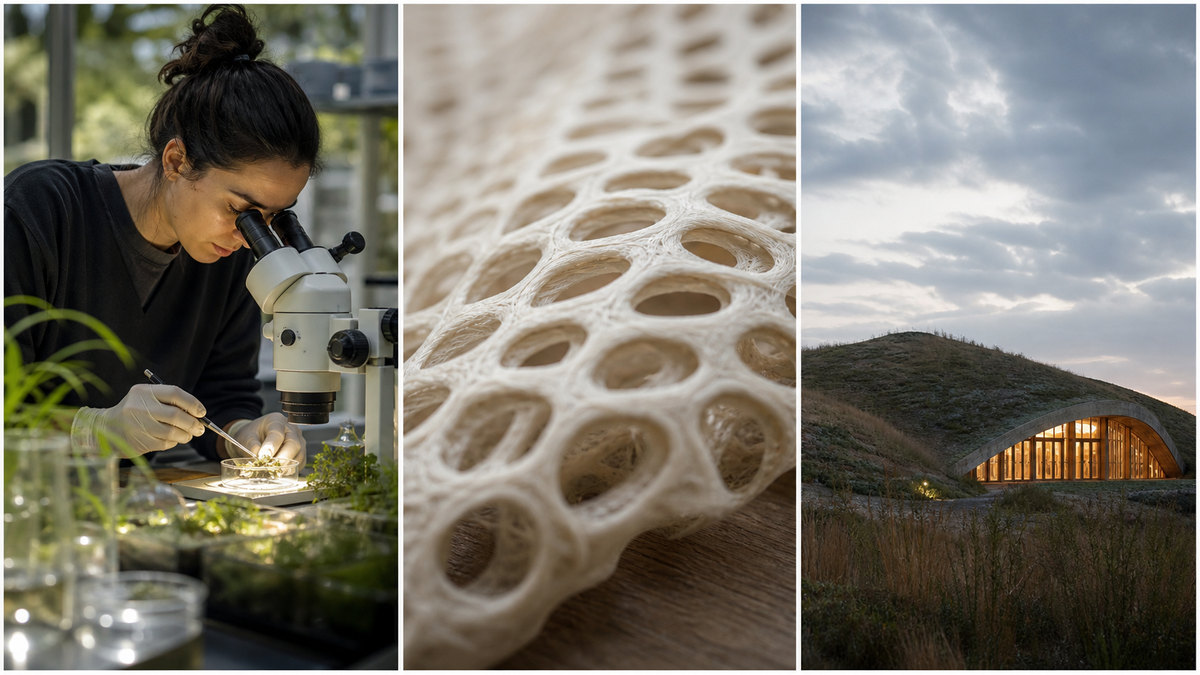
Biodesign shifts part of the designer's work from shaping finished matter to managing growth conditions, variability and biological safety.
The editorial focus of Biodesign and the Future of Grown Materials is the gap between an attractive proposition and a durable result. By placing Ecovative mushroom packaging at the centre of the discussion, the article traces how strategy is translated into tools, behaviours and maintenance.
Observed System: Ecovative mushroom packaging
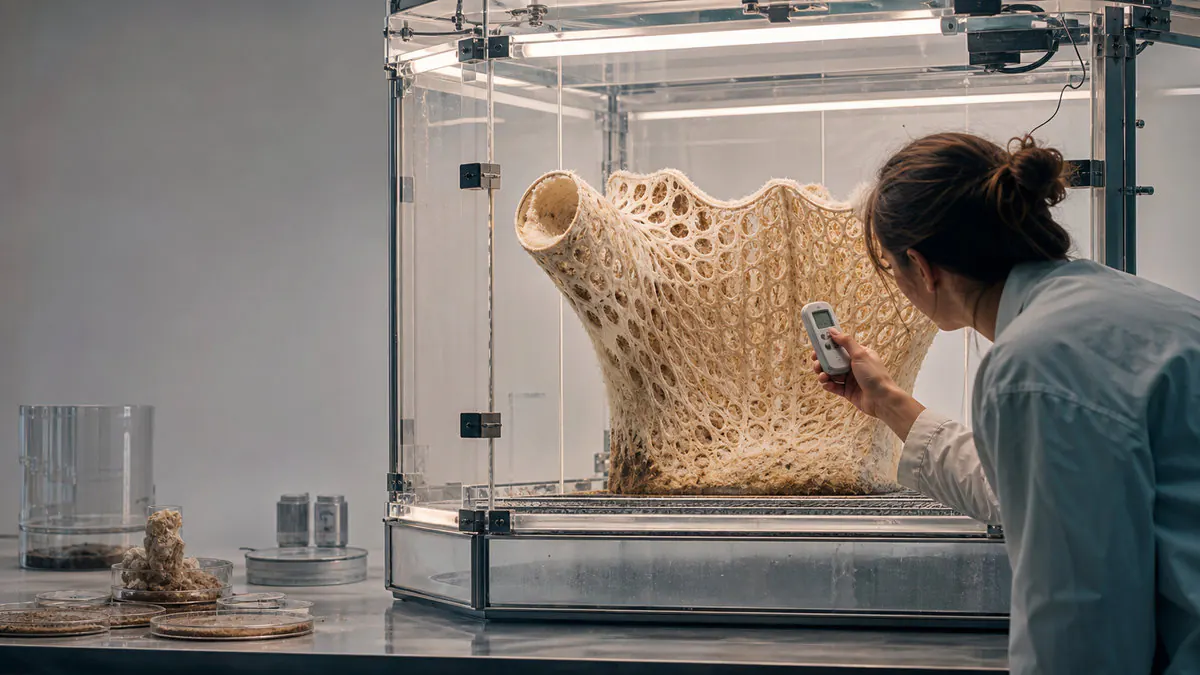
Mycelium-based packaging shows how agricultural feedstock and controlled growth can produce protective forms without conventional foams.
Mycelium-based packaging shows how agricultural feedstock and controlled growth can produce protective forms without conventional foams. The case earns attention because it gives the argument a specific setting, but its transferability depends on resources, governance and local knowledge. Supporting material includes Ecovative — We Grow Better Materials; Ellen MacArthur Foundation — Mushroom Packaging: Ecovative; Cambridge — Bacterial Cellulose: A Biodesign Critical Analysis; Communications Materials — Bioengineering Functional Bacterial Cellulose.
Limits and Tensions
Pilot products do not prove universal compostability, cost competitiveness or performance at every scale.
A responsible reading also requires restraint. Pilot products do not prove universal compostability, cost competitiveness or performance at every scale. No single example can settle the wider debate, and the absence of comparable data should remain visible rather than being filled with assumption.
Action Framework
Define the disposal context, test contamination and ageing, document feedstock, validate manufacturing consistency, and compare complete life cycles.
Define the disposal context, test contamination and ageing, document feedstock, validate manufacturing consistency, and compare complete life cycles. Used together, these actions help teams test the proposition before scale and revisit it after real users, operators and environmental conditions enter the picture.
AURELIS Position
A biological sample becomes a material only when its production and end-of-life systems are designed too.
A biological sample becomes a material only when its production and end-of-life systems are designed too. The editorial conclusion is provisional by design: stronger independent evidence or long-term results should be able to change it.