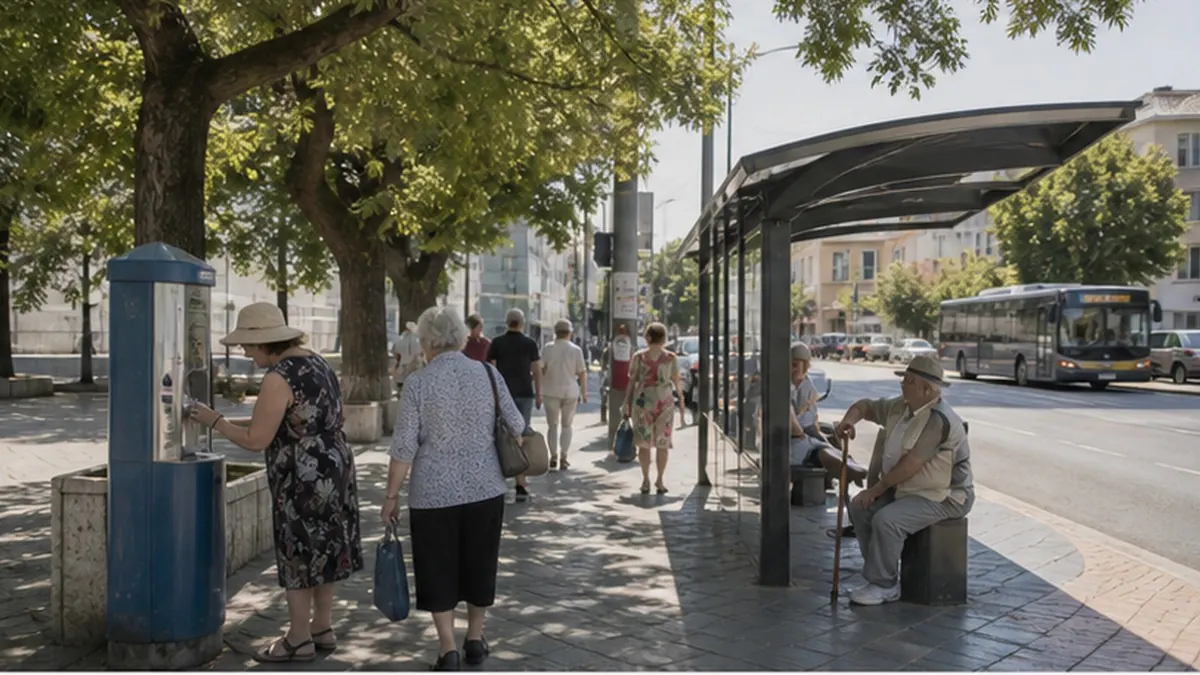
AbstractAbstract
Extreme heat is affecting Europe and many regions, and it is exacerbating air pollution, wildfires and urban heat pressure.Urban design requires the use of thermal risk as a daily public service issue.
2025 Timeline and Evidence
Western Europe experiences significant high temperatures under the influence of strong high pressure and dry air.
The urban heat island will amplify heat stress and put a higher risk to the elderly and chronically ill.
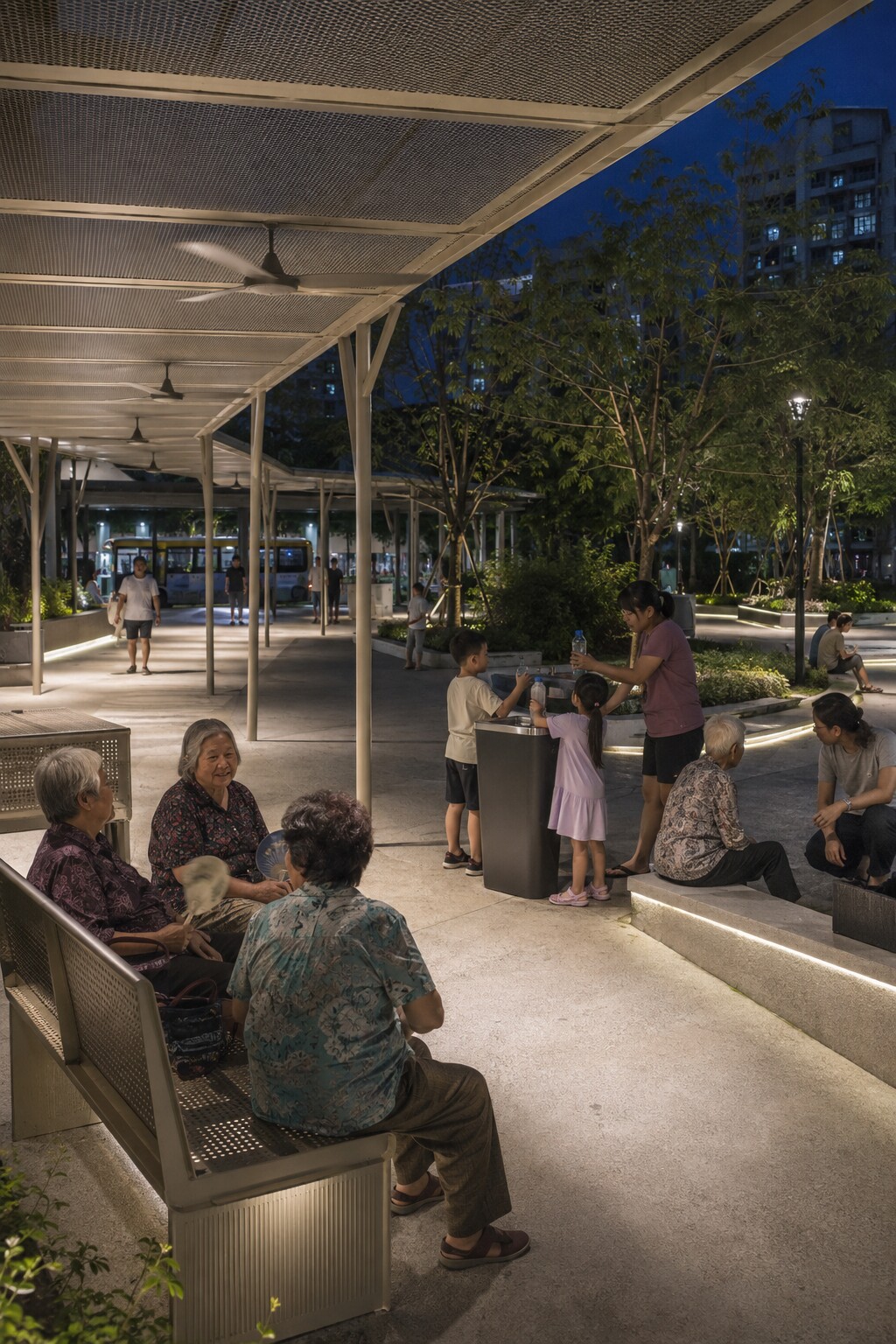
The shadow, drinking water, night opening and public transportation together determine whether residents can safely operate.
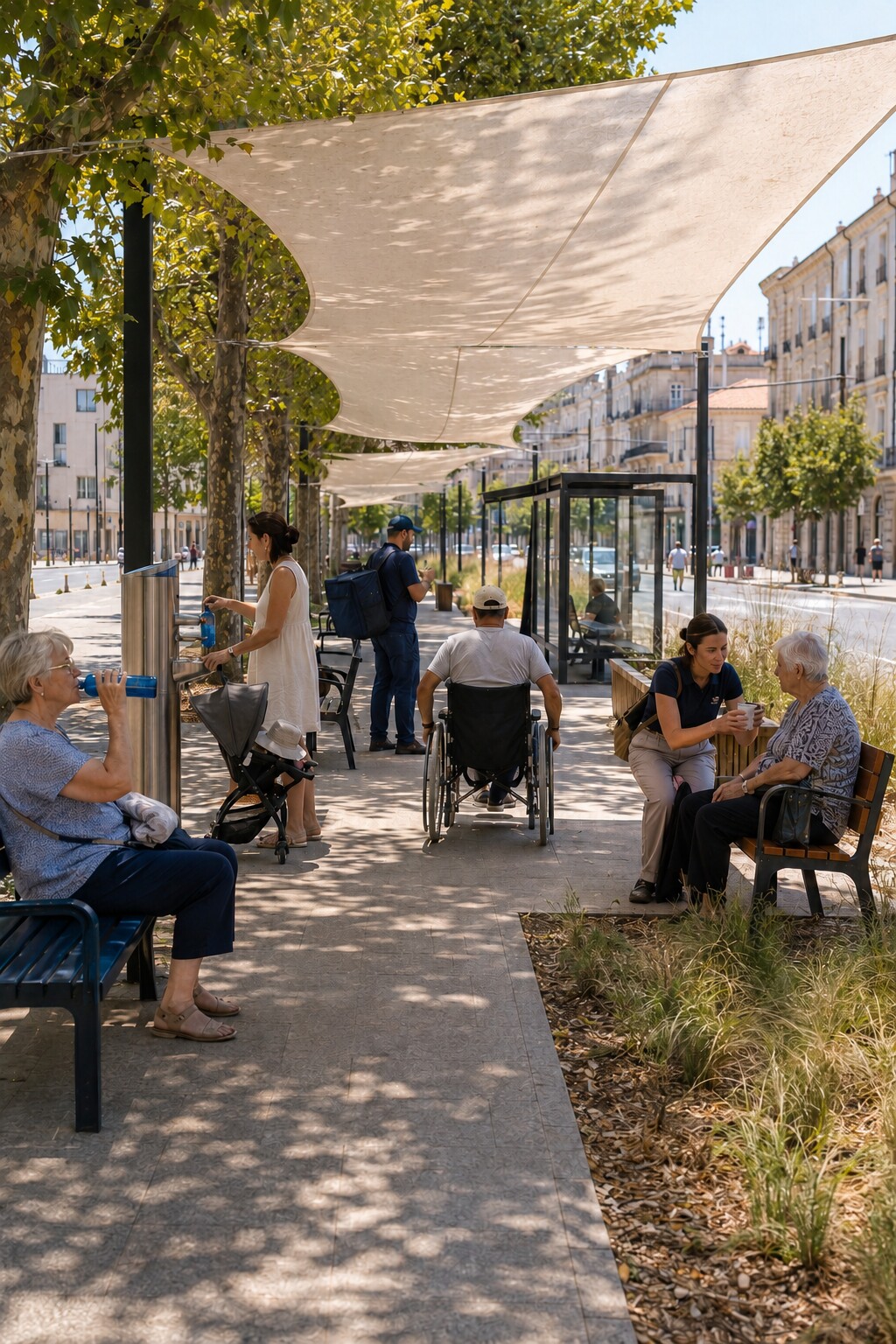
In-depth research
Increasing the green area alone is not enough to answer who gets the cooling when.The design needs to analyze the walking path, waiting time, residential ventilation, night safety and cooling center accessibility, and avoid passing the cost on to the most vulnerable.
Design Response Design Response
01 Map crowd activity and shadow maps during high-temperature periods.
Drink water, rest and information on the continuous path.
03 Use the somatosensory temperature and the use of data to evaluate the effect of the transformation.

AURELIS observation
Climate adaptation will shift from landscape add-ons to urban basic performance; the best option is to protect people who are not free to choose their environment first.
Source of sources
01 https://public.wmo.int/media/news/extreme-heat-grips-europe